

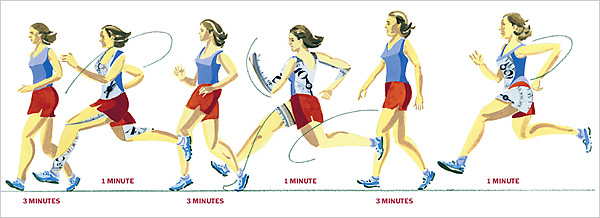
If you have been training for a while, you have probably noticed that improving your endurance becomes increasingly difficult over time. While beginners make progress easily, the key for a well-trained individual lies in the intensity.
What is Aerobic Capacity?
Aerobic capacity is synonymous with cardiorespiratory endurance—the body’s ability to sustain work over a long period. Scientists measure it based on Maximal Oxygen Uptake (VO2max) and the lactate threshold.
Aerobic capacity is synonymous with cardiorespiratory endurance—the body’s ability to sustain work over a long period. Scientists measure it based on Maximal Oxygen Uptake (VO2max) and the lactate threshold.
Why Continuous Training Isn’t Enough
When you run at a steady, very high intensity (90-100% of your Maximal Aerobic Speed), your body fatigues quickly, forcing you to stop prematurely.
When you run at a steady, very high intensity (90-100% of your Maximal Aerobic Speed), your body fatigues quickly, forcing you to stop prematurely.
The Solution: Interval Training
To manage training at peak intensities (up to 140% of MAS) for a longer total duration, you need to introduce intervals into your routine. Science provides the blueprint for the perfect cardio session:
To manage training at peak intensities (up to 140% of MAS) for a longer total duration, you need to introduce intervals into your routine. Science provides the blueprint for the perfect cardio session:
-
- The Ideal Intensity: Working between 90–110% of your Maximal Aerobic Speed (MAS) yields the greatest cardiorespiratory overload and the best physiological adaptations.
- The Right Duration: Each sprint or repetition should last longer than 30 seconds to allow the body enough time to reach and sustain high levels of oxygen consumption.
- The Rest Dilemma: Choosing a passive rest interval (complete stop) allows you to accumulate a longer total training volume. If you choose active rest (e.g., light jogging), its intensity should be kept between 50-67% of your MAS to maintain high oxygen consumption and heart rate levels.
Conclusion
Improving aerobic capacity at an advanced level is not a matter of chance, but of scientific precision. Properly adjusting training intensity and strictly managing recovery times are the ultimate tools to break through any performance plateau safely and with maximum efficiency.
Improving aerobic capacity at an advanced level is not a matter of chance, but of scientific precision. Properly adjusting training intensity and strictly managing recovery times are the ultimate tools to break through any performance plateau safely and with maximum efficiency.
Would you like me to adapt this text into a shorter format for social media posts, or should we move on to another fitness topic?