

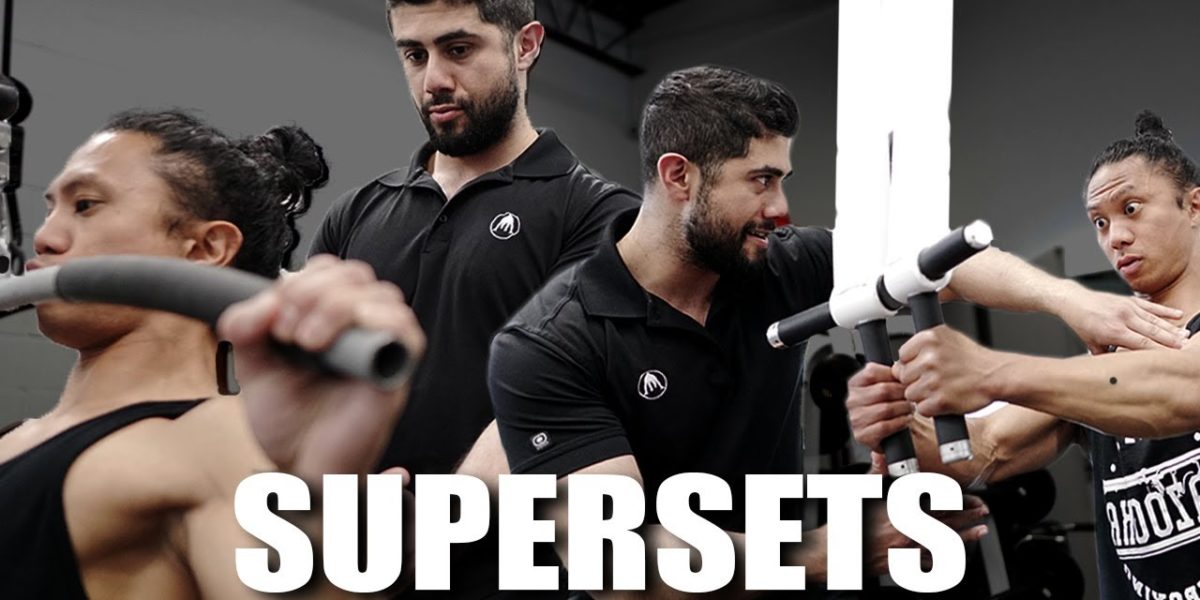
Want to cut down your gym time without sacrificing results, or feel like your workouts have hit a plateau? Supersets are one of the smartest and most effective intensity techniques in resistance training.
What is a Superset? It is the execution of two different exercises back-to-back with zero rest in between. You only take a rest break after completing both exercises.
While many gym-goers pair exercises randomly, choosing the right combinations can skyrocket muscle hypertrophy, endurance, and calorie burn. Let’s look at their benefits, the 5 main types, and how to safely incorporate them into your routine.
Why Add Supersets to Your Workout?
- Save Time: By cutting out rest periods between individual sets, you complete the same training volume in significantly less time.
- Increase Time Under Tension: Working the same muscle group with two consecutive exercises increases metabolic stress—a primary driver for muscle growth.
- Overload Without Heavy Weights: You can thoroughly exhaust a muscle using moderate weights, reducing stress on your joints.
- Break Through Plateaus: They add variety to your routine and keep your heart rate elevated, offering an added cardiovascular boost.
The 5 Main Types of Supersets (With Examples)
1. Pre-Exhaustion Superset
You pair an isolation exercise first (targeting a single joint) immediately followed by a compound movement for the same muscle group.
- Example (Chest): Dumbbell Flyes ➔ Barbell Bench Press.
- Why it works: During compound lifts, smaller assisting muscles (like the triceps) often fatigue before the target muscle does. Pre-exhausting your chest ensures it works at 100% capacity during the main lift. (Note: You will need to use lighter weights on the second exercise).
2. Post-Exhaustion Superset
Here, you reverse the order: start with a heavy compound lift and immediately follow it with an isolation exercise for the same muscle.
- Example (Quads): Barbell Squats ➔ Leg Extensions.
- Why it works: It is the ideal way to combine strength and hypertrophy. You lift heavy on the first exercise while you are fresh, then safely “finish off” the muscle on the second.
3. Compound Superset
This involves performing two heavy compound exercises back-to-back for the exact same muscle group.
- Example (Back): Lat Pulldowns ➔ Barbell Rows.
- Caution: This method is highly taxing on your central nervous system and requires massive energy. Use it sparingly and only if you have a solid fitness base.
4. Isolation Superset
You combine two isolation exercises that target different angles or heads of the same muscle.
- Example (Biceps): Incline Dumbbell Curls (long head) ➔ Preacher Curls (short head).
- Why it works: It delivers an intense muscle pump and targeted toning without straining your lower back or central nervous system.
5. Antagonist Superset
Arguably the most efficient type of superset, this involves pairing two opposing muscle groups (while one muscle contracts, the other relaxes).
- Popular pairings
Chest + Back (e.g., Bench Press + Dumbbell Rows)
Biceps + Triceps (e.g., Bicep Curls + Tricep Rope Pushdowns)
Quads + Hamstrings (e.g., Leg Extensions + Leg Curls)
- Why it works: While you train the second muscle, the first muscle rests and recovers its strength. This cuts your workout time in half without compromising performance.
4 Golden Rules for Safety & Results
- How long should I rest? After completing both exercises, rest for 60 to 90 seconds (or up to 2 minutes if performing heavy compound lifts).
- Don’t overdo it: Limit supersets to 1 or 2 pairings per workout (typically in the middle or toward the end of your session). Turning your entire workout into supersets will quickly lead to overtraining.
- Be smart with heavy lifts: Avoid pairing two technically demanding exercises that heavily load the spine (such as Squats and Deadlifts), as fatigue can compromise your form.
- Practice gym etiquette: During peak hours, choose supersets that use the same station or equipment (e.g., dumbbells on a single bench) so you aren’t hogging multiple machines at once.
Conclusion
Supersets are a powerful tool to beat workout boredom, save time, and spark new muscle growth. Try adding an antagonist superset to the end of your next session and feel the difference!