

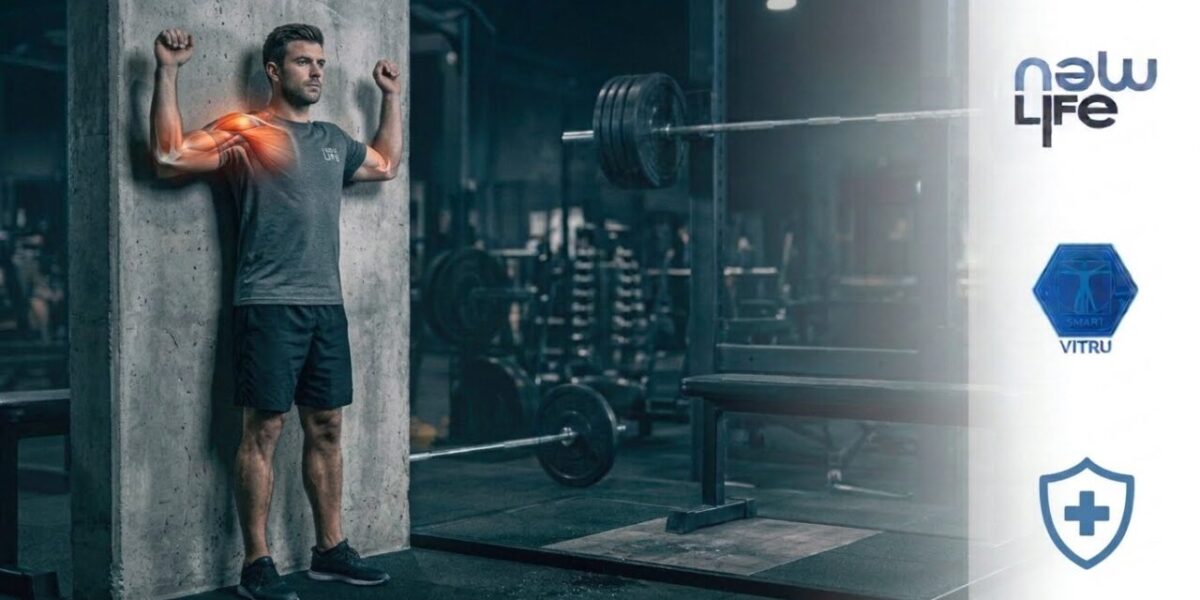
The shoulder joint is the most mobile joint in the human body, which simultaneously makes it highly vulnerable to muscle imbalances and injuries. A proper functional assessment of the shoulder girdle is a fundamental step before designing any exercise or rehabilitation program. One of the most reliable kinetic assessment tools is the Shoulder Rotation Test, which reveals valuable insights into the synergy between the rotator cuff and scapular muscles.
Anatomical Basis: Rotator Cuff and Scapular Muscles
To accurately interpret shoulder movement, we must first understand the primary stabilizers and movers of the region:
Rotator Cuff Muscles: Composed of four deep muscles that surround the humeral head and stabilize it within the glenoid fossa:
- Supraspinatus: Contributes to abduction and joint stabilization.
- Infraspinatus & Teres Minor: The primary external rotators of the shoulder.
- Subscapularis: The main internal rotator of the rotator cuff.
Scapular Muscles: Include muscles such as the levator scapulae and teres major, which directly influence the position and dynamic stability of the scapula during upper extremity movements.
How to Perform the Shoulder Rotation Test
The individual stands upright with their back, glutes, and head in contact with a wall:
- Starting Position: Abduct the shoulders to 90° and flex the elbows to 90° so that the forearms are parallel to the floor.
- External Rotation: Rotate the forearms upward, attempting to touch the back of the hands to the wall while keeping the elbows at shoulder height.
- Internal Rotation: From the starting position, rotate the forearms downward, attempting to bring the palms as close to the wall as possible without allowing the shoulders to lift off the wall.
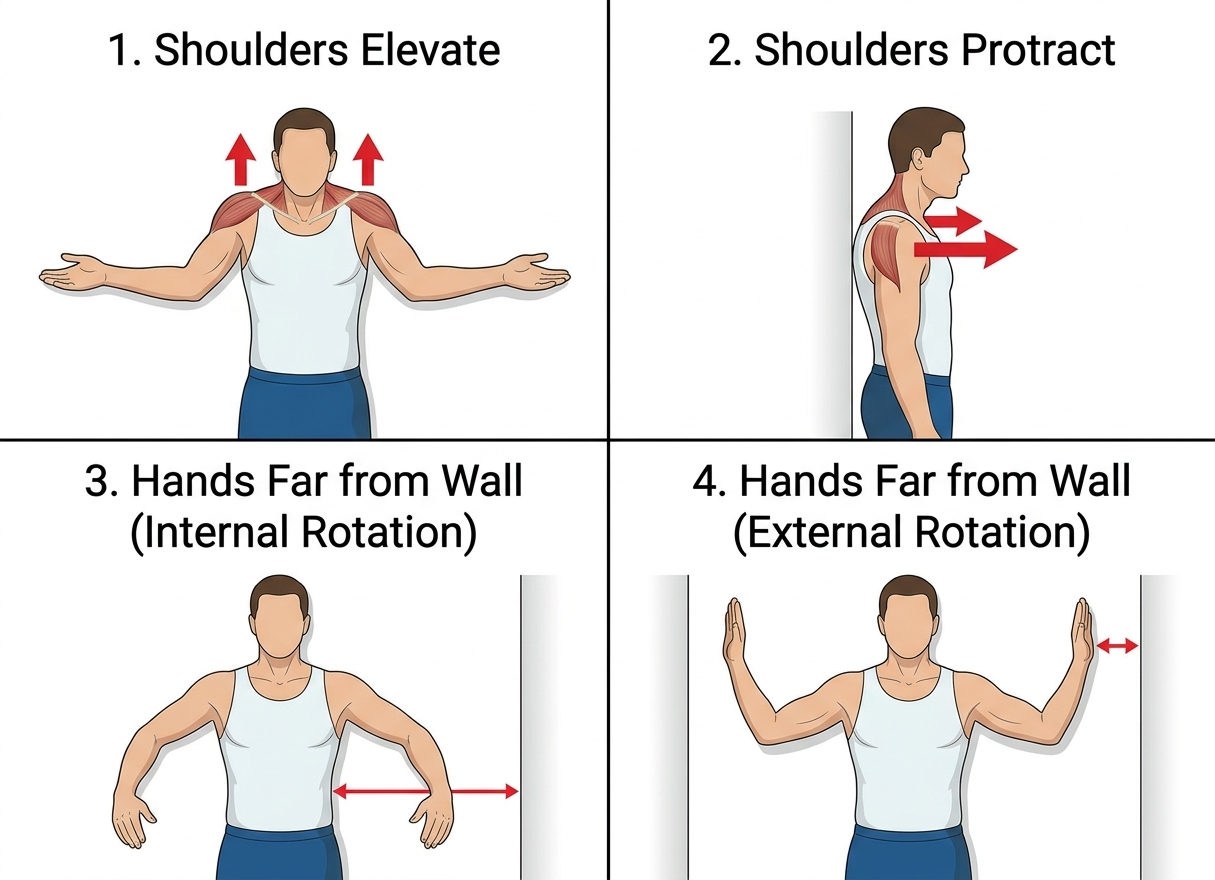
- Observation: The shoulders shrug upward toward the ears during the movement.
- Muscle Analysis: Indicates overactivity and shortening of the upper trapezius and levator scapulae, paired with weakness and atrophy of the middle and lower trapezius.
- Observation: The shoulders roll forward and pull away from the wall, especially during internal rotation.
- Muscle Analysis: Linked to shortened pectoral muscles (pectoralis major and minor) and weak scapular stabilizers, such as the rhomboids and serratus anterior.
- Observation: The individual is unable to bring their palms close to the wall without compensating with their torso or shoulders.
- Muscle Analysis: Demonstrates a restriction in internal rotation, often caused by shortening/stiffness of the external rotators (infraspinatus, teres minor) and the posterior deltoid.
- Observation: The back of the hands cannot reach the wall (or the individual hyperextends their lower back to achieve contact).
- Muscle Analysis: A classic sign of shortening in the powerful internal rotators and adductors of the humerus: latissimus dorsi, teres major, pectoralis major, and subscapularis, while the external rotators (infraspinatus and teres minor) exhibit weakness and atrophy.
Summary Guide to Shoulder Girdle Muscle Balance
Based on muscle dysfunction patterns (as outlined in Table 5.1), restoring proper shoulder function relies on two main pillars:
| Muscles Prone to Shortening (Require Stretching / Release) | Muscles Prone to Weakening / Atrophy (Require Strengthening) |
|---|---|
| Pectoralis major / minor | Infraspinatus |
| Latissimus dorsi | Teres minor |
| Teres major | Posterior deltoid |
| Upper trapezius | Middle / lower trapezius |
| Levator scapulae | Rhomboids & Serratus anterior |
| Sternocleidomastoid & Scalenes | Deep cervical flexors |
Conclusion
The Shoulder Rotation Test is more than a simple flexibility screen; it is a diagnostic window into the neuromuscular coordination of the entire upper quarter. By identifying compensations early (elevation, protraction, or inability to reach the wall), we can precisely target overactive muscles for release and activate weak stabilizers—ensuring healthy, strong, and functional shoulders.