

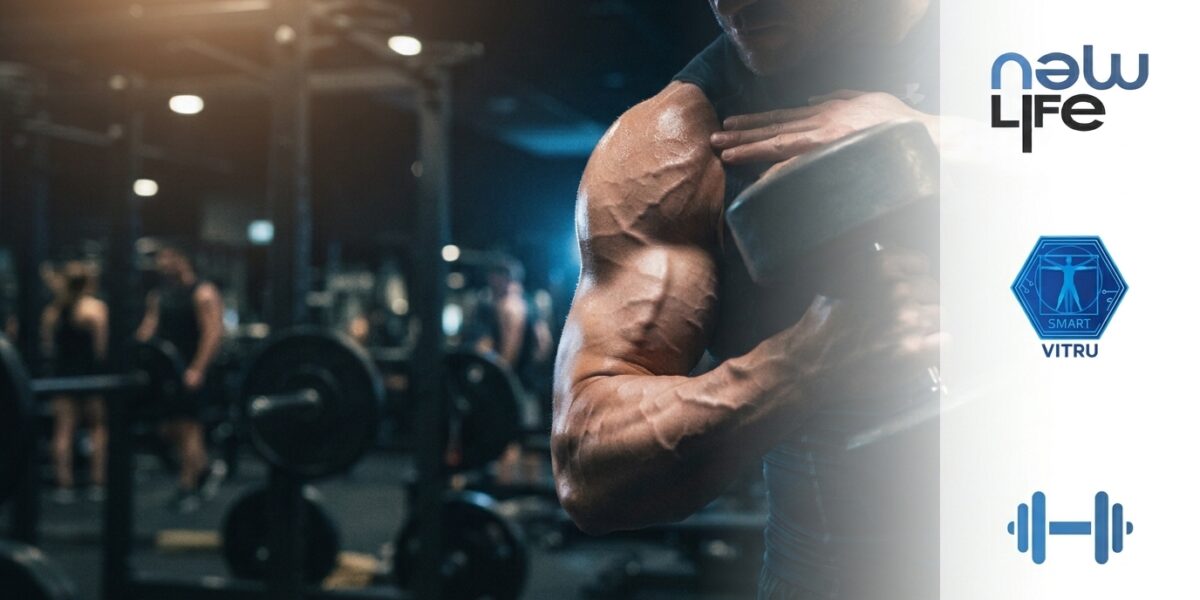
Every lifter loves that feeling halfway through a workout: your muscles swell up, your skin feels tight, veins become more prominent, and you suddenly look 20% bigger in the mirror. Arnold Schwarzenegger famously described it as the best feeling you can get in a gym.
But what is the Muscle Pump actually doing? Is it just a temporary optical illusion that deflates the moment you drive home, or does it play a real role in building permanent muscle mass?
Modern sports science now has a clear answer: cellular swelling isn’t just a great feeling—it is one of the three primary mechanisms of muscle hypertrophy.
What Happens Biologically Inside the Muscle During a “Pump”?
When you perform repeated muscle contractions (especially with short rest periods), a specific chain reaction occurs:
- Increased Blood Flow (Hyperemia): Your heart pumps large volumes of oxygen- and nutrient-rich blood straight into the working muscle.
- The “Trapping” Effect: As the muscle contracts repeatedly, it compresses the veins that carry blood out, while the arteries continue pumping fresh blood in. The result? Blood gets temporarily “trapped” locally.
- Cellular Swelling: Due to the buildup of metabolic byproducts (such as lactate), osmotic pressure draws water directly inside the muscle cells, causing them to swell like balloons.
Why Does the “Pump” Build Real Muscle?
For years, many believed the pump was purely cosmetic. However, research shows that cellular swelling acts as a powerful anabolic trigger:
- Activates Growth Pathways: When a muscle cell fills with fluid, its membrane stretches. The cell perceives this pressure as a threat to its structural integrity and responds by triggering muscle protein synthesis via the mTOR protein pathway, signaling the muscle to grow bigger and stronger.
- Reduces Muscle Breakdown: Cellular hydration has been shown to slow down protein degradation (catabolism).
- Delivers Fuel and Hormones: Increased blood flow delivers amino acids, glucose, and anabolic hormones directly to the muscle tissue when it needs them most.
- Keep the difference in mind: The pump itself subsides 1 to 2 hours after your workout. However, the biochemical cascade it triggers contributes directly to long-term muscle mass adaptations over the following weeks.
5 Practical Ways to Maximize Your Muscle Pump
If you want to take full advantage of cellular swelling (especially toward the end of your workouts), apply these strategies:
- Train in the 12–20 Rep Range : While heavy sets (4–6 reps) build maximum strength, moderate-load sets of 12 to 20 reps performed with a controlled tempo generate the highest metabolic stress and blood flow.
- Keep Rest Periods Short (45–60 Seconds): On isolation exercises (such as bicep curls, lateral raises, or leg extensions), keep rest breaks brief so blood doesn’t fully clear out of the muscle before your next set begins.
- Finish With Supersets or Drop Sets: Add a pair of Supersets or a Drop Set for muscle growth (immediately reducing the weight upon reaching fatigue and continuing without rest) on the final exercise for a muscle group. It is the fastest way to flood the muscle with blood.
- Use Constant Tension (Don’t Lock Out): During exercises like bench presses or squats, stop just short of fully locking out your elbows or knees at the top of each rep. This keeps the muscle under constant tension and maintains internal pressure
- Prioritize Hydration and Carbohydrates: Without water and stored muscle glycogen, there is no pump. Drink plenty of water throughout the day, add a pinch of salt (electrolytes), and eat a carbohydrate-rich meal 1.5 to 2 hours before training.
Conclusion
Chasing a pump shouldn’t be your only goal in the gym—progressive overload (getting stronger over time) remains king. However, when you combine heavy compound lifts at the start of your workout with targeted “pump” techniques at the end, you give your muscles the ultimate dual stimulus for maximum growth!