

Chin-Ups vs Pull-Ups: The Ultimate Guide to Strength, Variations, and Training
Chin-ups and pull-ups are among the most effective exercise choices for strengthening and developing the muscles of the upper body. Although they target similar muscle groups, they present key differences, which is why it is useful to include both in your routine. Both exercises require good physical conditioning, focus, and proper technique to build strength safely and avoid injury.
In this article, you will learn the main differences between chin-ups and pull-ups, how to perform them correctly, what the best variations are, as well as the benefits they offer to your training.
The Difference Between Chin-Ups and Pull-Ups
The fundamental difference lies in the type of grip and the width of the hands. These details change the degree of activation in the back and arm muscles, helping you choose the exercise that suits you best.
Chin-Ups (Underhand Grip Pulls)
-
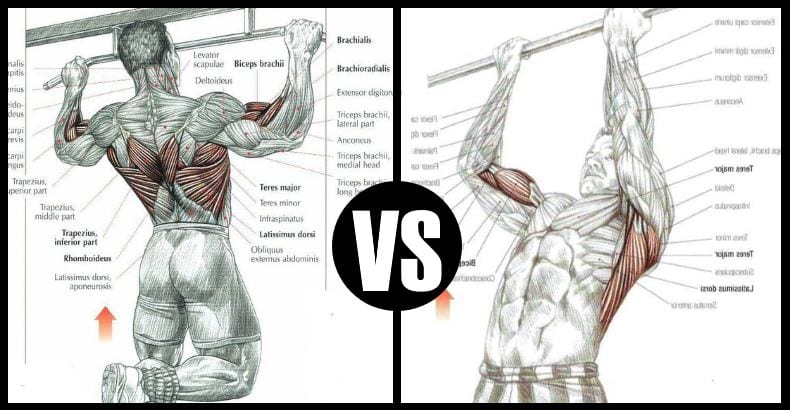
- The Grip: They are performed with a supinated (underhand) grip (palms facing toward your face), with the hands positioned roughly shoulder-width apart.
- The Movement: They utilize shoulder extension as the elbows move down and back, engaging the posterior deltoid and the teres major muscle during the movement.
- Muscle Activation: The latissimus dorsi (lats) remains the primary mover, but due to the hand position, the biceps brachii participate much more actively. For this reason, chin-ups are typically considered easier for beginners to execute compared to pull-ups.
Pull-Ups (Standard Grip Pulls)
-
- The Grip: They are performed with a pronated (overhand) grip (palms facing away from your face), with the hands positioned slightly wider than shoulder-width apart.
- The Movement: They utilize shoulder adduction as the elbows are pulled sideways, downwards, and backwards during the movement.
- Muscle Activation: They target the latissimus dorsi, rhomboids, trapezius, shoulders (posterior deltoids), and the brachialis muscles. Due to the grip, the latissimus dorsi shoulders most of the work, as it receives less assistance from the biceps in this exercise.
Why Are Pull-Ups Harder?
The wider grip and hand positioning in pull-ups isolate the latissimus dorsi more, providing less support from the biceps. This makes the exercise more demanding.
Which Exercise Is Better?
The fact that an exercise is harder does not necessarily mean it is better. Both movements are excellent additions to your program, as the common goal is strengthening the upper body and back. You can choose whichever you prefer, provided you execute it with proper posture to avoid injuries.
Proper Execution Guide
Stance for Chin-Ups
-
- Hang from the bar with a stable grip, palms facing towards you.
- Keep your shoulder blades squeezed together and pulled down and back.
- Initiate the movement by pulling your elbows down and back to lift your body.
- Aim to bring your chin over the bar while maintaining a neutral spine.
- Lower yourself slowly and under control to complete the repetition.
Stance for Pull-Ups
-
- Hang from the bar with a stable grip, palms facing away from your face.
- Engage your shoulder blades by pulling them down and back.
- Initiate the movement by pulling your elbows down to lift your body.
- Strive to bring your chin over the bar without excessively rounding your back.
- Lower yourself in a controlled manner to complete the repetition.
Injury Prevention
The more muscles you engage, the more likely you are to get injured if you are not careful. Proper form is the key that prevents these injuries. The main drawback in the beginning is relying on your body weight with untrained muscles, which causes instability or shaking. While the saying “no pain, no gain” holds some truth, you should never push your body in the gym when feeling sharp pain, as a muscle tear can require 2–3 days (or even longer) for full recovery.
-
- Shoulder Strain: Incorrect posture or overuse leads to joint strain. Before attempting these exercises, strengthen the area around the shoulders and focus on proper scapular placement.
- Elbow Tendonitis: This is linked to repetitive use combined with inadequate recovery. Gradually increase the intensity and incorporate rest days into your program.
Variations of Chin-Ups and Pull-Ups
If you are looking for greater variety in your pulling exercises, you can incorporate the following variations into your routine:
-
- Neutral Grip Pull-Ups: Performed with the palms facing each other. This variation allows the biceps to share the load with the latissimus dorsi, putting less pressure on the wrists and shoulders.
- Wide Grip Pull-Ups: Placing the hands even wider increases the participation of the latissimus dorsi, making the movement harder and improving back width.
- Close Grip Chin-Ups: By placing the hands closer together, the biceps are activated more intensely, making this a great way to start.
- Assisted Chin-Ups and Pull-Ups: Using a resistance band or an assisted machine provides the help you need to learn the correct movement pattern until you can lift your entire body weight.
Sets, Reps, and Progressive Overload
-
- Beginners: Start with 2–3 sets of 5–8 repetitions.
- Intermediates / Advanced: Target 3–4 sets of 8–12 repetitions.
There are two ways you can increase intensity:
-
- Increasing Training Volume: Gradually increase the total number of repetitions in a workout to hit your ultimate goal (e.g., executing 15 pull-ups in a row).
- Increasing Maximum Strength: You can add weight to a specialized dipping/pull-up belt during your sets. Start by adding 5 kg at a time, increasing it gradually over time while taking your physical conditioning into account.
Benefits of Chin-Ups and Pull-Ups
-
- Upper Body Strengthening: These are compound exercises, meaning they engage multiple muscle groups simultaneously (back, biceps, shoulders, upper back) for well-rounded development.
- Grip Strength Improvement: A strong grip is important for lifting heavier weights in other exercises, but also for daily functionality as we age. Pulling exercises increase forearm and hand strength.
- Functional Movement: “Pulling” is one of the fundamental human movement patterns. These exercises enhance overall physical performance, stability, and utility in daily activities or sports.
- Convenience and Accessibility: They can be performed almost anywhere, such as at the gym, at home (with a doorway bar), or outdoors. They require minimal equipment, making them ideal for everyone.
Pull-Ups & Chin-Ups Workout Example
Warm-up
5–10 minutes of light cardio or dynamic stretches.
Main Program
- Neutral Grip Pull-Ups: 3 sets of 8 repetitions.
- Wide Grip Pull-Ups: 3 sets of 8 repetitions.
- Close Grip Chin-Ups: 3 sets of 10 repetitions.
- Assisted Pull-Ups: 2 sets of 8 repetitions (using resistance bands).
- Chin-Ups: 3 sets of 8 repetitions.
Cooldown
5 minutes of static stretches for the back and arms.
Conclusion
Pull-ups and chin-ups form the cornerstone of calisthenics—a training system that utilizes body weight to develop relative strength and muscle mass. Both exercises deliver top-tier results in building a powerful back and a strong upper core.
Gradual and progressive overload, combined with strict adherence to proper technique, will allow you to see the results you are looking for with absolute safety. Integrate both exercises into your routine to add variety to your training, target more muscle groups, and build a strong, healthy, and fully sculpted body.
.